
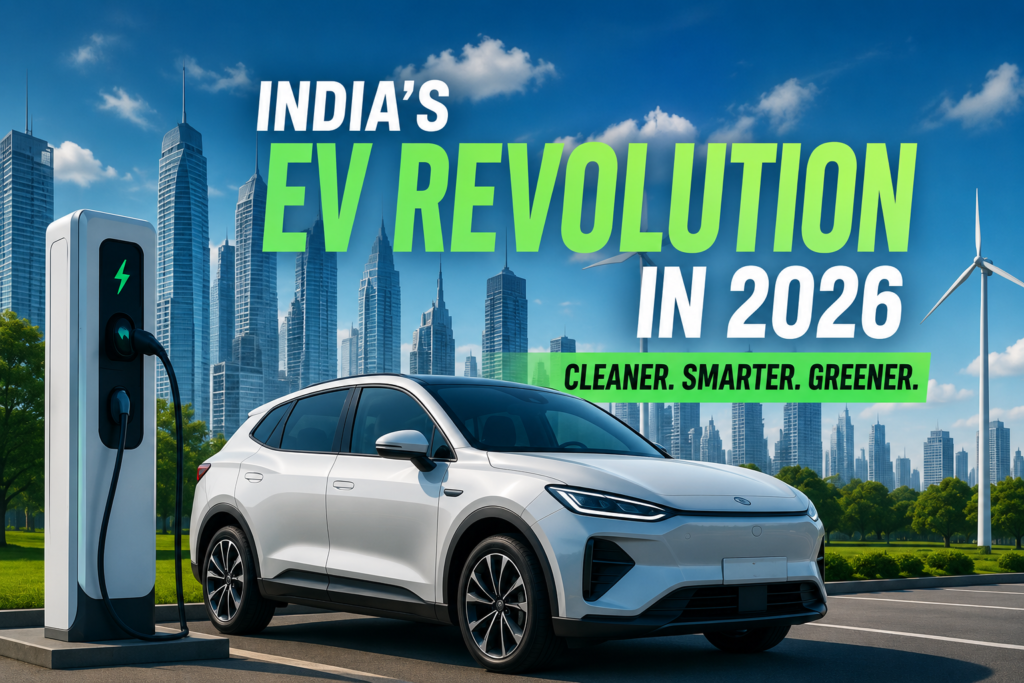
- The Indian electric vehicle (EV) industry is witnessing one of its most significant transformations in 2026. With new electric cars hitting the market almost every month, expanding charging infrastructure, improved battery technology, and stronger government support, India is rapidly moving towards a cleaner and smarter transportation future.
- Consumers who were once hesitant about switching from petrol and diesel vehicles are now seriously considering EVs due to lower running costs, better driving range, and a growing number of charging stations across the country. Automakers are also investing heavily in electric mobility, making 2026 a landmark year for the Indian automotive industry.
EV Sales Continue to Break Records
Electric vehicle adoption has reached new highs in 2026. According to industry data, EV retail sales across India have grown significantly compared to the previous year, while alternative fuel vehicles—including EVs, hybrids, and CNG cars—accounted for over 40% of passenger vehicle sales in June 2026, marking a record milestone.
This growth has been driven by increasing customer confidence, competitive pricing, improved battery performance, and lower maintenance costs.
More Affordable EVs Enter the Market
One of the biggest reasons behind India’s EV boom is the arrival of affordable electric SUVs and hatchbacks.
Manufacturers such as Tata Motors, Mahindra, MG Motor, Hyundai, Kia, Maruti Suzuki, and several new entrants are introducing products aimed at every budget segment. Upcoming models are expected to offer driving ranges between 350 km and 600 km on a single charge while bringing premium features like ADAS, panoramic sunroofs, connected technology, Vehicle-to-Load (V2L), and fast charging to more affordable price points.
Charging Infrastructure Expands Rapidly
Charging anxiety has long been one of the biggest concerns for EV buyers, but 2026 is changing that.
India now has around 29,000 public EV charging stations, and the number continues to rise through government initiatives and private investments. Major highways are receiving fast chargers, shopping malls are installing charging facilities, and residential societies are becoming increasingly EV-friendly.
This expansion is making long-distance EV travel more practical than ever before.
Government Policies Fuel Growth
Government support remains one of the strongest drivers behind India’s electric mobility mission.
The central government continues to encourage EV manufacturing through battery production incentives and domestic manufacturing programs, while state governments are offering purchase incentives, tax benefits, and registration fee exemptions.
One of the biggest policy developments in 2026 comes from Delhi, where the new EV Policy aims to accelerate electric mobility through incentives, large-scale charging infrastructure, and stricter measures to reduce dependence on petrol-powered vehicles over the coming years.
Better Batteries, Longer Range
Battery technology has improved considerably in 2026.
New EVs now offer higher energy density, faster charging times, and improved thermal management systems. Many manufacturers are introducing battery packs capable of delivering more than 500 km of certified range while supporting rapid DC fast charging that can recharge a large portion of the battery in under an hour.
These advancements are making EV ownership far more practical for both city commuters and highway travellers
India Strengthens Local Manufacturing
The Indian EV ecosystem is no longer focused only on vehicle assembly.
Major investments are flowing into battery manufacturing, semiconductor production, software development, charging equipment, and component localization. Domestic manufacturing is expected to reduce dependence on imports while making electric vehicles more affordable in the coming years.
The Road Ahead
Industry experts believe that 2026 marks the beginning of India’s next phase of electric mobility. With more affordable products, better infrastructure, government backing, and rapid technological improvements, EV adoption is expected to accelerate even further over the next few years.
While challenges such as charging availability in rural areas, battery recycling, and initial purchase prices still remain, the overall direction is clear—India is steadily moving toward an electric future.
Final Thoughts
The Indian EV market has entered an exciting phase in 2026. From feature-packed electric SUVs and improved battery technology to record-breaking sales and stronger government support, the country’s transition toward sustainable mobility is gaining unprecedented momentum.
For buyers, this means more choices, lower ownership costs, and better technology than ever before. For the automobile industry, 2026 is proving to be the year that electric mobility truly became mainstream in India.
Conclusion
With advanced technology, longer driving ranges, expanding charging networks, and exciting new electric vehicles entering the market, the country is moving steadily towards a cleaner and smarter automotive future. Whether you’re planning to buy your first EV or simply keeping up with the latest automotive trends, 2026 is shaping up to be a defining year for electric mobility in India.
Stay tuned for more breaking automotive news, upcoming car launches, expert reviews, and the latest EV updates—only here.